Seattle Limewash Painting · Services

Limewash Brick Painting in Seattle, WA

Seattle Limewash Painting limewashes brick in Seattle, Washington, from whole house exteriors and chimneys to interior brick walls. Most brick decisions start with color: whether red, orange or mismatched brick should become soft white, warm greige or an earth tone, with the brick texture still visible under the lime.

Next comes coverage, which runs from a sheer veil with the old color showing to a denser, uniform coat. Brick projects are taken on throughout Seattle and in Mercer Island, Burien, Tukwila, Lake Forest Park, Shoreline and Edmonds.

Request a brick quote

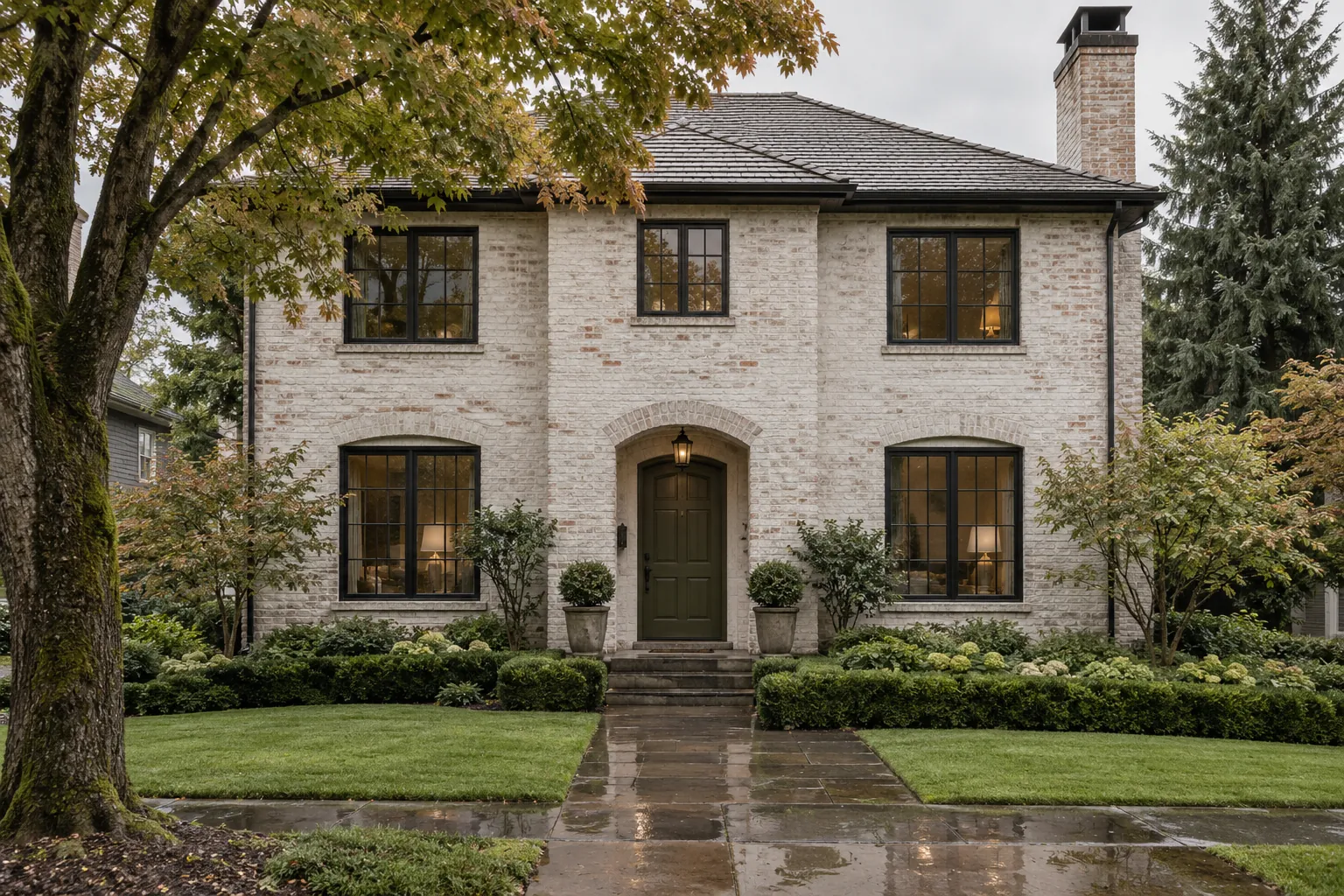
Brick house limewashed in soft warm white on a wet morning

Brick limewash options

Exterior brick houses

Doing the whole facade is a bigger commitment than it looks. Windows, doors and roof edges are masked, brick is pre-wetted, and each elevation is completed separately when conditions allow. Taller homes frequently need scaffolding or a lift to work safely, and that shapes both the schedule and the price.

Red, orange and mismatched brick

If strong red or orange brick, or an addition in a slightly different brick, is the problem, decide how far to neutralize it. A tinted base coat can counter warm undertones before a paler finish coat, and a hidden test patch shows how much the original color will still push through.

Previously painted brick

Painted brick forces a choice, because paint blocks absorption. Intact paint can sometimes be primed with a bonding or mineral coat, if the chosen product allows; flaking paint has to be stripped; and certain limewash ranges are intended solely for uncoated masonry. When paint is failing across a house, stripping and switching to a breathable finish is often the more durable route.

Chimneys and brick details

With chimneys, garden walls, planters and the upright faces of steps, the question is match or accent: the same shade as the house, or a paler one. Horizontal surfaces that people walk on or that hold water, such as treads and sills, are generally excluded. Crown, flashing and mortar need to be sound first, as limewash will not seal cracks against water.

Interior brick walls

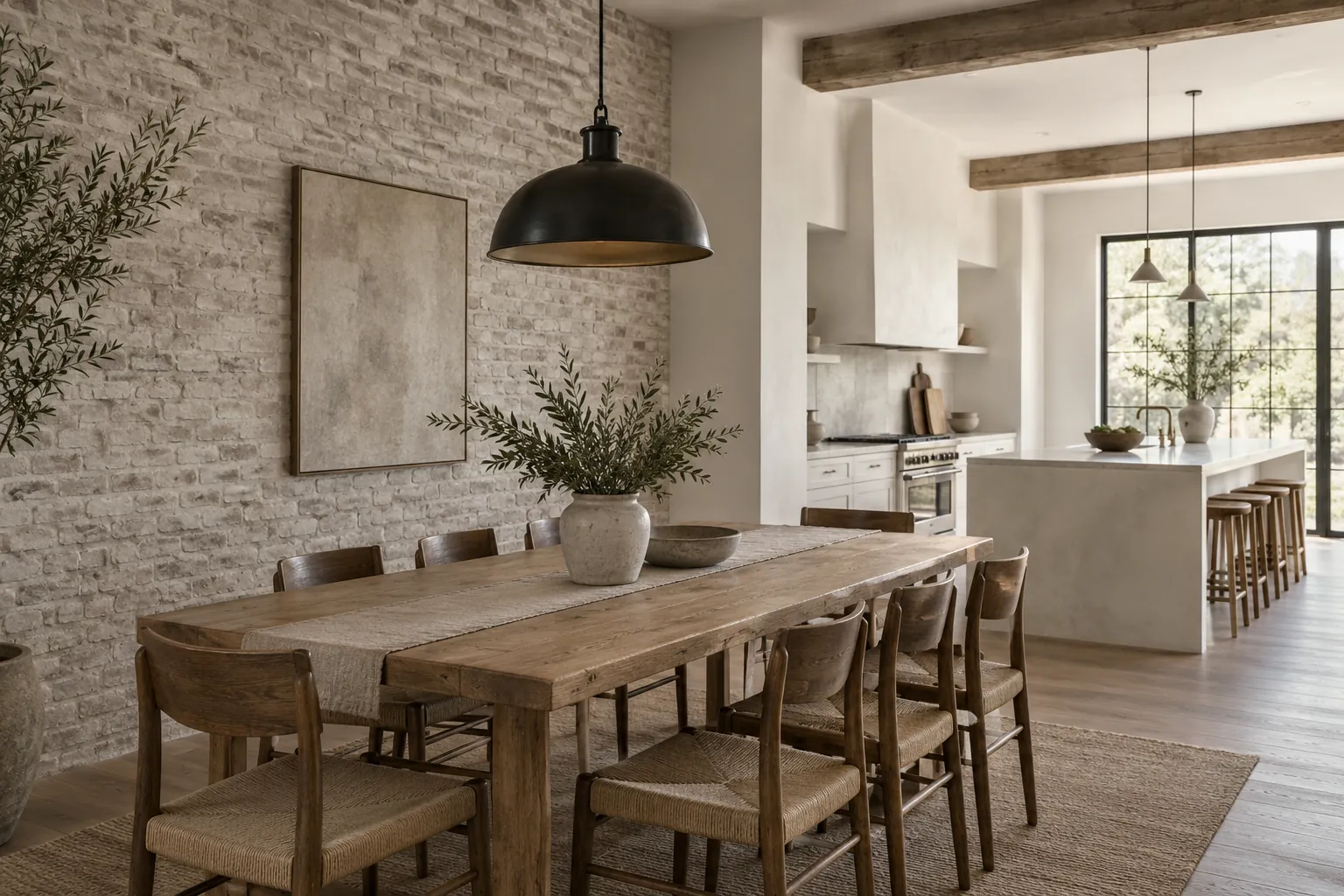
Indoor brick in a kitchen, basement or loft is mainly a question of how much brightness you want. Rain does not come into it indoors. Dust, salt bloom and leftover sealers still have to be handled, and afterwards the wall should be dusted rather than scrubbed.

Washed-back and weathered looks

Want more brick showing than a full coat allows? Certain limewash products can be rinsed back with water while still fresh, revealing more brick for an aged effect. The working time differs by product, so a trial on your brick is the way to find out.

Interior brick dining wall limewashed in pale stone gray

What brick needs before it is limewashed

Whether brick is ready comes down to three tests: is it clean, sound and absorbent? Washing removes dirt, moss and loose material; efflorescence, the white salt bloom, signals moisture moving through the wall; and a splash of water reveals any old water-repellent sealer that would stop the lime soaking in.

Some fixes come before any finish. Cracked mortar, failed caulking, leaking gutters and soil heaped against the wall are repaired or flagged, because breathable limewash lets moisture out but does not stop it getting in. Where a house predates 1978, any scraping or removal of old paint has to be done lead-safe, by a firm holding certification under Washington’s renovation rules.
Which exterior surfaces suit limewash

Not every exterior material is a candidate. These services stick to masonry, where lime performs best: uncoated brick, natural stone, cement stucco and concrete block. Wood or fiber-cement siding, painted trim and similar materials fall outside them, and whether any given limewash can go on them is product-specific; makers disagree on fiber-cement board, for instance.

Mixed facades change the questions to ask. For a stone plinth or chimney, read limewash stone; for a rendered wing or block foundation, read limewash stucco and concrete.

Brick limewash and the Puget Sound climate

Timing is the main climate decision. Exterior coats need mild, dry conditions with no rain while they cure, so Seattle facades are best planned for the drier part of the year, avoiding hot midday sun and walls still wet from storms.

Should you recoat everything later? Usually not. The rain-facing sides fade first, and because lime chalks instead of peeling, a new coat on just those walls evens the house out again.

Request a brick limewash quote

Is it a whole house, a chimney or one wall, and is the brick bare or painted? Send that with the property address, plus photos of each elevation if you have them.

Phone coming soon